Product Description
A Diverter Pulley is a mechanical component used in traction elevator systems to change the direction of the hoisting ropes and provide the required rope arrangement between the traction machine, elevator car, and counterweight. It is installed in the machine room or overhead area and helps achieve the desired roping configuration and suspension ratio.
The diverter pulley guides the elevator ropes while maintaining proper alignment, reducing rope stress, and ensuring smooth elevator movement.
Main Functions:
- Changes rope direction Redirects the hoisting ropes between the traction sheave, car, and counterweight.
- Provides proper rope alignment Keeps ropes correctly positioned during elevator travel.
- Supports roping arrangements Enables configurations such as 2:1 roping systems.
- Distributes load Helps balance the load between the elevator car and counterweight.
- Ensures smooth operation Reduces rope vibration and improves ride comfort.
Main Components:
- Pulley/sheave wheel Grooved wheel over which elevator ropes pass.
- Shaft and bearings Allow smooth rotation of the pulley.
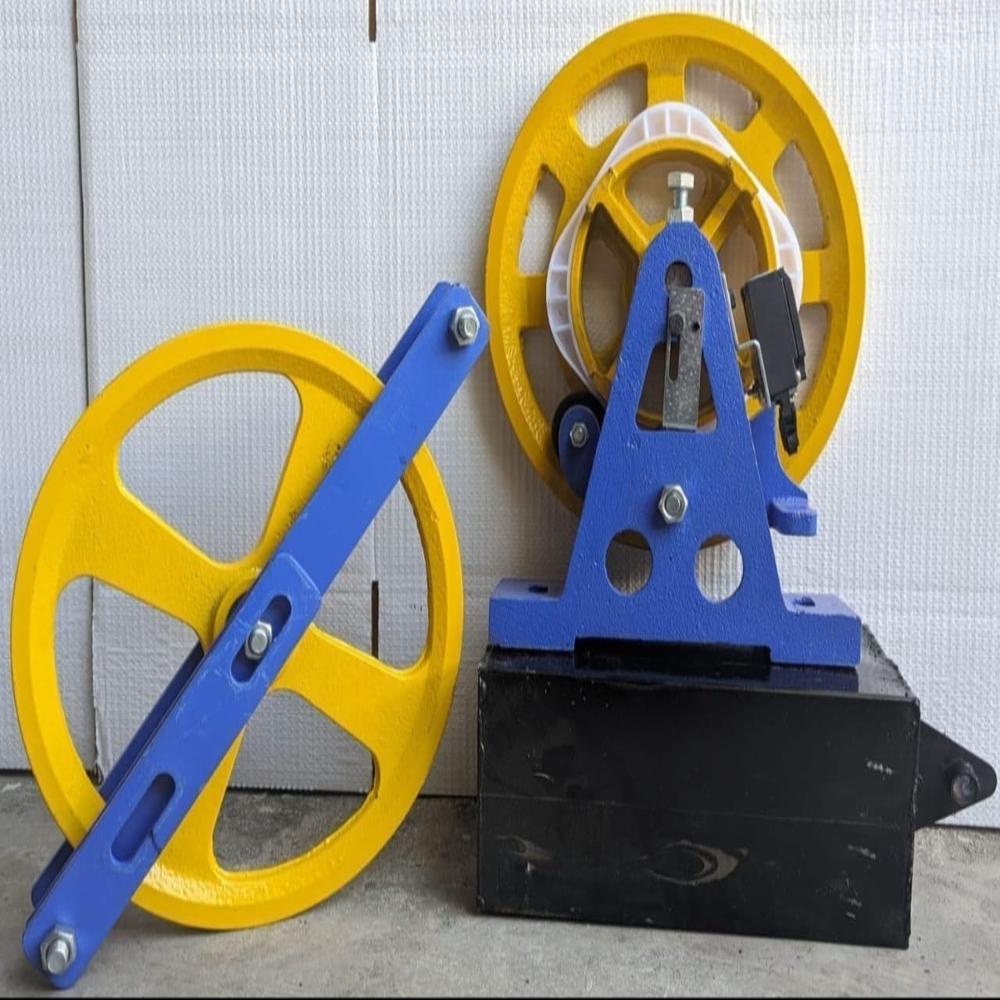
- Pulley frame/support Holds the pulley assembly securely.
- Rope grooves Provide proper grip and guidance for hoisting ropes.
- Guard and safety arrangement Prevents rope displacement.
Advantages:
- Improves elevator efficiency and performance.
- Allows flexible machine room and rope layout design.
- Reduces wear on ropes and other drive components.
- Helps maintain stable and quiet elevator operation.
Application:
Diverter pulleys are commonly used in traction elevators, especially in systems where the machine position and elevator car movement require the hoisting ropes to be redirected. Proper inspection and lubrication of the pulley bearings and checking of rope groove wear are important for safe elevator operation.
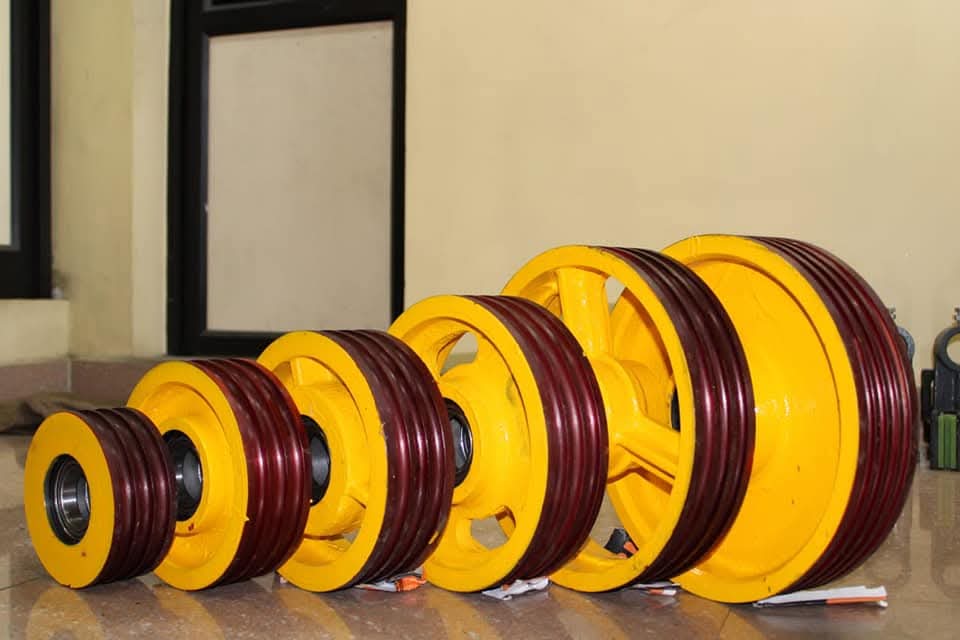
Versatile Grooving OptionsChoose from precision V-Groove or U-Groove designs, available in single or multiple groove configurations. This flexibility ensures compatibility with various rope alignments and elevator system specifications, safeguarding the performance of your elevator's mechanical setup.
Custom Fit and Universal UseOur pulleys offer fully customized bore sizes and a wide diameter range to meet individual shaft and system requirements. Engineered for universal compatibility, they integrate seamlessly with most elevator, lift, and hoist models, avoiding costly retrofits or additional parts.
Durable Build and ProtectionManufactured from sheet metal, cast iron, or cast steel with optional polyurethane or grooved rims, each pulley features an industrial-grade yellow coating for corrosion resistance. Groove protection enhances service life, while smooth machined surfaces prevent wire rope wear.
FAQ's of diverter pulley for elevator use:
Q: How do I determine the correct diverter pulley size and groove type for my elevator system?
A: Start with your shaft specifications to select the appropriate bore size and choose between V-Groove or U-Groove profiles based on your wire rope requirements. The outer diameter should align with your load and space constraints; custom sizing is available to ensure a precise fit.
Q: What benefits does the yellow rust-resistant coating provide to the pulley?
A: The industrial yellow paint, combined with groove protection, significantly enhances the pulley's resistance to corrosion. This helps maintain smooth operation and prolongs service life, even in humid or challenging environments.
Q: When would I need to request a custom bore size or special groove configuration?
A: Custom bore sizes and unique groove arrangements are recommended when your shaft diameter or rope specifications differ from standard industry sizes. We accommodate tailored orders to match your specific elevator, hoist, or lift system.
Q: Where are these diverter pulleys typically installed?
A: These pulleys are generally installed within the elevator machine room, shaft, or machinery assemblies where rope direction adjustments or deflections are required for proper system functioning.
Q: What is the maintenance process for these pulleys?
A: Our pulleys require minimal maintenance. Routine inspections for lubrication of the heavy-duty bearings and occasional surface cleaning are usually sufficient to ensure reliable performance and durability.
Q: How do these pulleys ensure wire rope protection during operation?
A: Each pulley features a precisely-machined, smooth edge across the groove area. This design minimizes abrasion and wear on the wire rope, promoting safety and extending the lifespan of both the rope and the pulley.
Q: What factors determine the maximum lifting weight for each pulley?
A: The maximum lifting weight depends on pulley size, bearing specification, and material construction. To select the right pulley, consider your system's load requirements as well as the pulley's outer diameter and overall build quality.




 Send Inquiry
 Send Inquiry